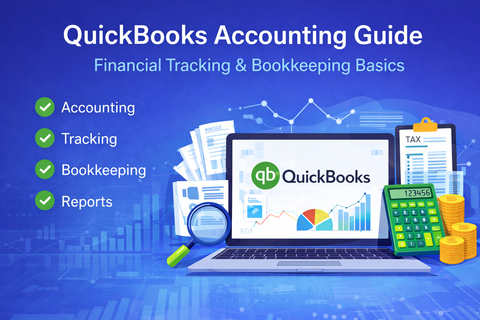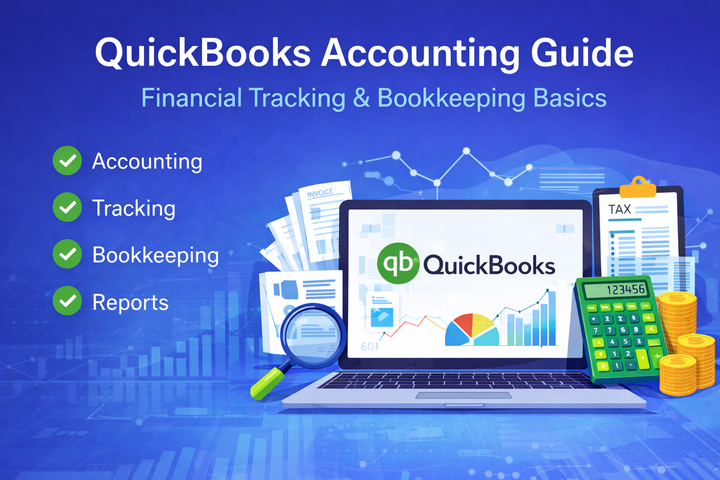
QuickBooks: A Complete Guide to Accounting Basics, Financial Tracking, and Small Business Bookkeeping
QuickBooks is a widely recognized accounting software platform designed to help individuals and businesses manage financial records, track transactions, organize bookkeeping data, and generate accounting reports.
Understanding QuickBooks and Digital Accounting Systems
QuickBooks is a widely recognized accounting software platform designed to help individuals and businesses manage financial records, track transactions, organize bookkeeping data, and generate accounting reports. Digital accounting tools like QuickBooks were developed to simplify financial management tasks that were traditionally handled through manual ledgers, spreadsheets, and paper documentation.
Accounting systems exist to record and classify financial transactions so that organizations can monitor income, expenses, assets, liabilities, and overall financial performance. For many years, accounting was handled using physical bookkeeping books where every transaction had to be recorded manually. As businesses grew and financial regulations became more structured, software-based accounting systems emerged to automate many of these processes.
QuickBooks functions as a centralized financial record management platform. It allows users to organize financial data, categorize transactions, reconcile bank statements, prepare financial summaries, and maintain bookkeeping accuracy. The software also supports standard accounting principles such as double-entry bookkeeping, which ensures that every transaction affects at least two accounts.
In a typical workflow, financial data is entered or imported into the accounting system and then organized into categories such as revenue, operational expenses, payroll records, or tax-related transactions. These records can later be compiled into financial statements such as profit-and-loss summaries or balance sheets.
Accounting software platforms generally support tasks such as:
-
Recording income and expense transactions
-
Monitoring financial performance through reports
-
Tracking invoices and payments
-
Managing payroll records
-
Organizing tax documentation
-
Maintaining digital bookkeeping records
These capabilities help create an organized financial system where financial information is easier to track, review, and analyze.
Why Digital Accounting and Bookkeeping Matter Today
Financial record management plays a critical role in modern business operations. Whether a company is small, medium, or large, accurate accounting practices help ensure financial transparency and compliance with regulatory requirements.
Many small businesses rely on digital accounting tools because manual bookkeeping can be time-consuming and prone to errors. Accounting software simplifies tasks that would otherwise require multiple spreadsheets, handwritten ledgers, or complex calculations.
Several groups benefit from digital bookkeeping systems.
Small business owners use accounting platforms to track daily transactions, monitor expenses, and maintain financial visibility. Entrepreneurs often need organized financial records for budgeting, tax documentation, and performance evaluation.
Freelancers and independent professionals may also use accounting software to manage invoices, track payments, and maintain income records. For these individuals, maintaining accurate bookkeeping data helps ensure proper financial reporting.
Financial advisors and accountants often rely on digital accounting systems to analyze financial reports and review business performance indicators. Accounting data can provide insight into revenue trends, operating expenses, and cash-flow management.
The following table illustrates common financial management tasks and how accounting systems help organize them.
| Financial Activity | Purpose | Example Outcome |
|---|---|---|
| Expense Tracking | Monitoring operational spending | Organized expense categories |
| Revenue Recording | Tracking incoming payments | Monthly income summaries |
| Bank Reconciliation | Matching records with bank statements | Verified transaction accuracy |
| Financial Reporting | Generating financial statements | Profit and loss analysis |
| Tax Documentation | Organizing financial records for compliance | Structured tax records |
Accurate financial data is particularly important in an environment where businesses must comply with tax regulations, maintain audit-ready records, and track operational performance. Digital accounting tools allow users to maintain organized financial records while reducing the risk of calculation errors or missing documentation.
In addition, the growth of online commerce, remote work, and digital payments has increased the volume of financial transactions processed electronically. Accounting software helps manage this complexity by automatically recording and categorizing transactions within a structured system.
Recent Developments in Accounting Technology (2024–2025)
Accounting technology has evolved rapidly in recent years as financial software platforms incorporate automation, artificial intelligence, and cloud computing capabilities.
One significant trend in 2024 was the expansion of AI-assisted bookkeeping tools. These tools analyze transaction patterns and automatically categorize financial entries based on historical data. This helps reduce manual data entry while improving bookkeeping efficiency.
Another development involves the continued growth of cloud-based accounting platforms. Cloud systems allow users to access financial data from different devices and locations through secure online environments. By early 2025, many accounting platforms had expanded mobile and browser-based interfaces to improve accessibility.
In June 2024, financial technology reports highlighted an increase in the integration of banking data with accounting software systems. Secure bank-data connections allow accounting platforms to import transaction records directly into bookkeeping systems, simplifying reconciliation processes.
Automation has also expanded within financial reporting features. Accounting platforms increasingly generate real-time financial summaries, enabling businesses to monitor revenue, expenses, and financial health more frequently.
Another emerging trend is predictive financial analytics. Some accounting platforms began incorporating data analysis tools that estimate cash-flow projections based on historical financial activity.
These technological developments reflect a broader shift toward digital financial management, where accounting systems operate as integrated financial intelligence tools rather than simple bookkeeping records.
Financial Regulations and Accounting Compliance
Accounting software platforms operate within regulatory frameworks that govern financial reporting, taxation, and business compliance. While the specific regulations vary by country, most jurisdictions require businesses to maintain accurate financial records for tax reporting and auditing purposes.
In the United States, financial recordkeeping practices are influenced by accounting principles such as Generally Accepted Accounting Principles (GAAP). These standards provide guidelines for how financial transactions should be recorded and reported.
Public companies may also follow International Financial Reporting Standards (IFRS), which are widely used across many countries to standardize financial reporting practices.
Government agencies responsible for tax administration often require businesses to maintain documentation for several years. Accounting systems help maintain this documentation in organized digital formats that can be referenced during audits or tax reviews.
The following table highlights examples of financial compliance responsibilities.
| Compliance Requirement | Purpose | Typical Documentation |
|---|---|---|
| Tax Reporting | Reporting business income and expenses | Financial statements |
| Record Retention | Maintaining financial records for audits | Transaction logs |
| Payroll Documentation | Tracking employee compensation | Payroll summaries |
| Financial Transparency | Ensuring accurate reporting | Accounting reports |
In some countries, digital accounting tools also integrate with government tax systems or electronic invoicing platforms. These integrations allow businesses to submit financial documentation more efficiently.
Accounting compliance rules may vary depending on business structure, revenue levels, and regulatory jurisdiction. For this reason, financial management tools are designed to support standardized recordkeeping practices that align with established accounting frameworks.
Tools and Resources Related to Digital Accounting
A variety of financial management tools, software applications, and educational resources exist to help individuals understand bookkeeping principles and maintain accurate financial records.
Accounting platforms often provide dashboards that summarize financial activity and generate detailed reports. These reports can include income summaries, expense breakdowns, and financial performance indicators.
Common accounting tools and resources include:
-
Digital accounting platforms used for bookkeeping and financial reporting
-
Financial statement templates that organize accounting data
-
Expense tracking spreadsheets for personal or business finance
-
Payroll management tools used for compensation tracking
-
Tax documentation organizers for financial recordkeeping
The following table summarizes several categories of accounting resources.
| Resource Type | Description | Example Use |
|---|---|---|
| Accounting Software | Digital platforms for financial record management | Business bookkeeping |
| Budget Templates | Structured financial planning documents | Expense monitoring |
| Financial Dashboards | Visual summaries of financial performance | Cash-flow analysis |
| Accounting Education Resources | Learning materials about financial management | Accounting fundamentals |
| Tax Documentation Tools | Systems that organize financial records | Tax preparation |
Mobile financial applications also provide simplified interfaces for recording transactions and reviewing financial summaries. These applications often include dashboards that visualize income trends, expense categories, and financial ratios.
Educational resources such as accounting tutorials, financial management courses, and bookkeeping guides can also help individuals understand how accounting systems operate.
These tools collectively support the broader goal of maintaining organized financial records and improving financial decision-making.
Frequently Asked Questions About QuickBooks and Accounting
What is bookkeeping in accounting?
Bookkeeping is the process of recording financial transactions such as income, expenses, payments, and transfers. These records form the foundation of financial reporting and accounting analysis.
How does accounting software help manage financial records?
Accounting software organizes financial transactions into structured categories and generates financial reports. This automation helps maintain accurate records while reducing manual calculations.
What is double-entry bookkeeping?
Double-entry bookkeeping is an accounting method where every transaction affects at least two accounts. One account records a debit while another records a corresponding credit, ensuring balanced financial records.
Why is financial tracking important for businesses?
Financial tracking helps businesses monitor income, manage expenses, analyze profitability, and maintain compliance with tax regulations. Accurate financial records also support better budgeting and planning decisions.
Can accounting software generate financial reports automatically?
Many accounting systems generate financial reports automatically based on recorded transactions. Examples include balance sheets, income statements, and cash-flow summaries.
Conclusion
Digital accounting platforms such as QuickBooks represent a major shift in how financial records are organized and managed. By replacing manual bookkeeping processes with automated digital systems, these tools help individuals and businesses maintain structured financial records and monitor financial activity more efficiently.
Accurate accounting practices are essential for understanding financial performance, maintaining compliance with regulatory requirements, and preparing reliable financial reports. As financial technology continues to evolve, accounting software increasingly incorporates automation, cloud accessibility, and data analysis tools that improve financial management capabilities.
The growing integration of banking systems, financial dashboards, and digital reporting tools reflects a broader transformation in the accounting profession. Financial management is becoming more data-driven, enabling organizations to gain deeper insights into revenue trends, operational expenses, and long-term financial planning.
Understanding the fundamentals of bookkeeping, financial tracking, and accounting principles can help individuals make more informed financial decisions and maintain organized financial records in an increasingly digital economy.