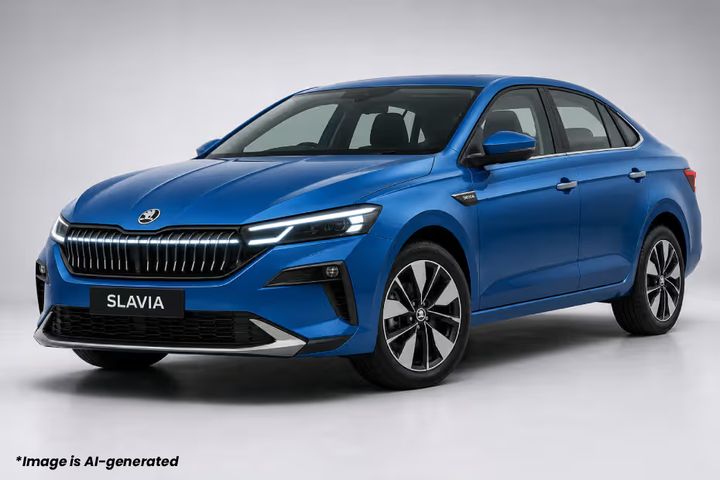
2026 Skoda Slavia Facelift Complete Overview & Guide
The 2026 Skoda Slavia facelift is a mid-cycle update of Skoda Auto India’s locally developed midsize sedan. The original Slavia was introduced for India on the MQB-A0-IN architecture and entered the Indian market in 2022. The facelift is intended to keep the sedan current through changes to exterior styling, cabin technology and selected mechanical components rather than replacing it with an entirely new generation.
As of 17 August 2026, the complete India specification has not yet been published. Skoda has teased the refreshed model, and its public launch is scheduled for 18 August 2026. Recent previews show revised exterior details, while established automotive reports indicate that the existing 1.0-litre and 1.5-litre turbo-petrol engines will continue. The major expected mechanical change is an 8-speed torque-converter automatic transmission for the 1.0 TSI version, replacing the earlier 6-speed automatic.
This distinction between confirmed and expected information is important. A facelift can involve different equipment across variants, and final details may change when the manufacturer publishes the official variant list.
Why the Slavia Facelift Matters in 2026
The midsize sedan category in India has changed significantly in recent years. Drivers now compare engine output and cabin space alongside digital displays, automatic transmissions, safety technology, car insurance terms and fuel efficiency.
The Slavia also remains relevant because Skoda continues to use the India-focused MQB-A0-IN architecture for locally developed products. The current Slavia has 1.0 TSI and 1.5 TSI petrol engines. Skoda’s official India page also lists automatic transmission availability, an electric sunroof on selected variants, wireless smartphone connectivity on selected variants and ventilated front seats on selected variants.
For general readers, the facelift may change how the Slavia compares with other midsize sedans in gearbox technology, infotainment, safety and rear-seat comfort. It also affects research around vehicle finance, an auto loan, car insurance, road tax and fuel planning.
| Area | Current Slavia | 2026 Facelift Status |
|---|---|---|
| Platform | MQB-A0-IN | Expected to continue |
| 1.0 TSI | Available | Expected to continue |
| 1.5 TSI | Available | Expected to continue |
| 1.0 automatic | 6-speed torque converter | 8-speed unit expected |
| 1.5 automatic | 7-speed DSG | Expected to continue |
| Exterior | Existing design | Revised front and rear details |
| Cabin technology | Features vary by trim | Updates expected |
| ADAS | No confirmed facelift specification | Await official reveal |
Current Slavia powertrain details come from Skoda’s published specifications, while the facelift information in the table reflects the latest pre-launch reports available on 17 August 2026.
Recent Updates and What Has Changed
On 20 January 2026, Skoda introduced the updated Kushaq in India with an 8-speed torque-converter automatic for the 1.0 TSI and additional comfort technology. Because the Kushaq and Slavia share key India-specific engineering, this provides context for the transmission direction reported for the Slavia, but it does not confirm identical equipment.
On 21 July 2026, Skoda Auto India added limited dual-tone Shimla Green and Steel Grey colour versions to the Slavia Monte Carlo. The company stated that these versions continued with the 1.0 TSI paired with a 6-speed torque-converter automatic and the 1.5 TSI paired with a 7-speed DSG. This provides a useful snapshot of the pre-facelift powertrain arrangement immediately before the updated model’s introduction.
On 24 July 2026, Skoda published an E20 fuel compatibility update. It stated that its BSVI petrol cars delivered in India after 1 April 2020 have fuel-system components compatible with E20 petrol. This is relevant to the Slavia because the sedan belongs to Skoda’s BSVI-era petrol range.
The facelift story accelerated in August. Skoda teased the updated Slavia ahead of an 18 August 2026 launch. Preview images indicate additional chrome detailing around the grille, revised headlamp detailing, altered bumper elements and a new alloy-wheel design. Reports also point to a 10.25-inch digital driver display and trim changes inside the cabin. These cabin details should be considered expected until the manufacturer releases the final specification.
Reports differ on advanced driver-assistance and some convenience equipment. Claims about Level 2 ADAS, a 360-degree camera, panoramic roof or rear-seat massage should therefore remain unconfirmed before the official reveal.
Expected Engine and Transmission Overview
The facelift is expected to retain the familiar turbo-petrol strategy rather than introduce a diesel or hybrid powertrain at launch. The 1.0 TSI in the current range produces 115 PS and 178 Nm, while the 1.5 TSI produces 150 PS and 250 Nm. Skoda also uses Active Cylinder Technology with the 1.5 TSI, which can deactivate two cylinders under light-load conditions.
| Powertrain | Output Reference | Expected Transmission Direction |
| 1.0 TSI petrol | 115 PS, 178 Nm | 6-speed manual and expected 8-speed automatic |
| 1.5 TSI petrol | 150 PS, 250 Nm | 7-speed DSG expected to continue |
The transmission update is one of the most significant expected technical changes. Actual fuel efficiency and acceleration depend on final gearing and engine calibration, so certified figures should be checked after launch rather than inferred from the number of gears alone.
The 8-speed automatic is not an unfamiliar component within Skoda India’s current range. The updated Kushaq introduced an 8-speed torque-converter automatic with its 1.0 TSI in January 2026, which supports the technical plausibility of the reported Slavia update.
Why Safety and Regulation Matter
Every new passenger vehicle introduced in India must satisfy applicable homologation requirements under the Central Motor Vehicles Rules. The government’s VAHAN homologation portal describes homologation as the process used to verify roadworthiness and compliance with Indian emission, safety and related standards before a vehicle can be approved for the market.
Bharat NCAP is another important reference. The programme began from 1 October 2023 and applies to type-approved M1 passenger vehicles below 3.5 tonnes. Participation is voluntary, and vehicles are evaluated under AIS-197 for adult-occupant and child-occupant protection. A previous Global NCAP result or a rating from another version of a vehicle should not automatically be treated as a Bharat NCAP result for the facelift.
Indian safety rules have also continued to evolve. Government information notes revised safety-belt and restraint standards applicable from 1 April 2025, including rear-seat safety-belt reminder requirements for front-facing rear seats in M1 vehicles manufactured from that date.
E20 petrol is also relevant. Skoda’s July 2026 clarification states that its BSVI petrol vehicles delivered after 1 April 2020 are compatible with E20. Drivers should still follow the owner’s manual, fuel-label information and manufacturer guidance for the specific model year.
Practical Research: Insurance, Finance and Registration
Variant equipment, engine choice and transmission type can influence car insurance calculations, vehicle finance planning, road tax and registration data. A simple worksheet can help compare trims.
Useful comparison fields include:
- Engine and transmission
- Certified fuel efficiency
- Airbag count and safety equipment
- Tyre size and spare-wheel specification
- Infotainment and smartphone compatibility
- Car insurance premium estimate
- Auto loan interest rate
- EMI calculator result
- State road tax
- Vehicle registration charges
- Warranty terms
- Recommended maintenance interval
For car insurance research, compare the insured declared value, third-party component, own-damage component, deductibles and add-on coverage rather than focusing on a single premium figure.
For vehicle finance, compare the annual interest rate, loan tenure, down payment and total repayment schedule. An EMI calculator is useful for understanding how tenure and interest rate change the monthly instalment.
Registration-related information can also be checked through the government’s VAHAN platform, which provides vehicle registration processes and associated records.
Tools and Resources
Several official and neutral resources can make research more accurate:
- Skoda Auto India model page: Useful for final engine, variant, safety and feature data after the facelift is published.
- Skoda Auto India news page: Useful for dated manufacturer announcements and E20 guidance.
- Owner’s manual: Useful for fuel grade, warning lights, tyre pressures and operating instructions.
- VAHAN portal: Useful for registration-related information and vehicle records.
- Parivahan PUC portal: Useful for pollution-certificate information.
- Bharat NCAP information: Useful for understanding India’s voluntary crash-rating framework.
- Fuel efficiency calculator: Divide distance travelled by fuel consumed to track real-world km/l.
- EMI calculator: Enter principal, annual interest rate and tenure to estimate monthly repayment.
- Car insurance checklist: Record coverage type, deductibles, IDV and policy exclusions in one comparison sheet.
Frequently Asked Questions
When is the 2026 Skoda Slavia facelift launching in India?
The public launch is scheduled for 18 August 2026. As of 17 August, Skoda has released teasers, while the complete official variant and feature list is still awaited.
Will the Slavia facelift get a new engine?
Current reports indicate that the 1.0 TSI and 1.5 TSI turbo-petrol engines will continue. The more notable expected mechanical change is the 8-speed torque-converter automatic for the 1.0 TSI. Final combinations should be checked after the official announcement.
Will the 2026 Slavia facelift have ADAS?
There is no sufficiently clear official facelift specification confirming an ADAS package as of 17 August 2026. Reports have varied, so it is safer to wait for the manufacturer’s final equipment chart.
Is the Skoda Slavia compatible with E20 petrol?
Skoda stated on 24 July 2026 that its BSVI petrol cars delivered in India after 1 April 2020 have components compatible with E20 fuel. The Slavia falls within the BSVI-era range, though the owner’s manual remains the model-specific reference.
What should be checked when comparing Slavia facelift variants?
Focus on engine and gearbox, airbags, driver-assistance equipment, infotainment, wheel size, certified fuel efficiency, warranty, car insurance details, vehicle finance terms and registration-related charges. Variant-level specifications matter more than assumptions based on the top trim.
Conclusion
The 2026 Skoda Slavia facelift is best understood as an evolutionary update to an established India-focused sedan rather than a completely new generation. The strongest indications ahead of its 18 August introduction are refreshed exterior styling, updated cabin technology and an 8-speed automatic transmission for the 1.0 TSI, while the 1.0 TSI and 1.5 TSI engines are expected to remain central to the range.
The most important point is to separate confirmed facts from pre-launch expectations. Skoda’s recent Kushaq update, July 2026 Slavia Monte Carlo changes and E20 clarification provide useful context, but the final Slavia facelift feature matrix will only become reliable once the manufacturer publishes it. For informed research, readers should compare the official specification sheet alongside safety information, fuel efficiency, car insurance terms, vehicle finance calculations, registration requirements and Bharat NCAP information where applicable.