Mercedes-Benz GLC Electric Overview: Features, Facts, Details & Complete Guide
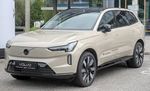
The Mercedes-Benz GLC Electric is a battery-electric luxury SUV developed as an electric counterpart to the established GLC range. Globally, Mercedes-Benz officially refers to the model as the GLC with EQ Technology, although GLC Electric and GLC EV are commonly used descriptions.
The model represents an important change in Mercedes-Benz's electric vehicle strategy. Rather than creating every electric vehicle under a separate EQ identity, the company is increasingly integrating electric powertrains into familiar vehicle families such as the GLC.
The electric GLC was presented globally at IAA Mobility in Munich in September 2025. It is built around a dedicated electric architecture and introduces technologies including an 800-volt electrical system, Mercedes-Benz Operating System or MB.OS, advanced charging management and a new generation of electric drive components.
For India, Mercedes-Benz confirmed in September 2026 that the GLC Electric will arrive before the end of 2026. Bookings are scheduled to begin in the first week of October 2026, and the vehicle will be assembled locally in India. The initial India-specification version will be the GLC 400 4MATIC.
Mercedes-Benz GLC Electric Specifications
The India-bound GLC 400 4MATIC uses a 94 kWh usable lithium-ion battery combined with electric motors at the front and rear. This dual-motor configuration creates an electric all-wheel-drive system.
Peak system output is rated at 360 kW, with maximum torque of 800 Nm. Mercedes-Benz states a 0–100 km/h acceleration time of 4.3 seconds and a maximum speed of 210 km/h.
| Specification | Mercedes-Benz GLC 400 4MATIC Electric |
|---|---|
| Battery | 94 kWh usable lithium-ion |
| Drive | Dual-motor all-wheel drive |
| Peak Power | 360 kW |
| Maximum Torque | 800 Nm |
| WLTP Range | 568–715 km |
| 0–100 km/h | 4.3 seconds |
| Maximum Speed | 210 km/h |
| Maximum DC Charging | 330 kW |
| AC Charging | 11 kW standard, up to 22 kW depending on configuration |
| Electrical Architecture | 800 volt |
| Boot Capacity | 570 litres |
| Maximum Boot Capacity | 1,740 litres |
| Front Storage | 128 litres |
Mercedes-Benz's certified data lists combined energy consumption between approximately 14.9 and 18.9 kWh per 100 km, depending on vehicle specification and test conditions.
The WLTP range should be understood as a standardized laboratory figure rather than a guaranteed driving distance. Real-world electric vehicle range varies with speed, temperature, traffic, elevation, climate-control usage, wheel configuration, passenger load and driving style.
Why the GLC Electric Matters
The GLC Electric is significant because it places a dedicated battery-electric architecture into one of Mercedes-Benz's established SUV categories.
For users considering a premium electric SUV, range is only one part of the ownership equation. Charging speed, electric vehicle insurance, battery technology, EV financing, home charging capability, cabin space, software, safety technology and public charging infrastructure can also influence practical usability.
The GLC Electric attempts to address long-distance charging requirements with an 800-volt architecture and maximum DC charging capability of 330 kW.
Under suitable charging conditions, Mercedes-Benz states that the GLC 400 4MATIC can replenish its battery from approximately 10% to 80% in 22 minutes. It can add up to approximately 305 km of WLTP range in 10 minutes under the specified conditions.
Actual charging speed depends on charger capability, battery temperature, battery state of charge, ambient conditions and the vehicle's charging curve.
Range and Charging Explained
A large battery is useful for longer journeys, but battery capacity alone does not determine electric vehicle efficiency.
The GLC 400 4MATIC combines its 94 kWh battery with a highly integrated electric drivetrain. The rear electric drive unit incorporates a two-speed transmission designed to balance acceleration and high-speed efficiency. Mercedes-Benz also uses silicon-carbide-based power electronics to reduce electrical losses.
Its official WLTP range extends from 568 km to 715 km, depending on configuration. Mercedes-Benz states that real-world range can differ because of environmental conditions, driving behaviour, tyres, auxiliary systems, battery ageing and vehicle load.
The vehicle supports up to 11 kW AC charging as standard in its global specification, with 22 kW capability depending on configuration. This makes home and destination charging relevant alongside public DC fast charging.
For Indian conditions, access to a suitable residential electrical connection can be particularly important for drivers who expect to complete most charging overnight.
Interior, MBUX Hyperscreen and MB.OS
One of the most visible technology features is the new 39.1-inch MBUX Hyperscreen. Measuring 99.3 cm diagonally, it is the largest display Mercedes-Benz has introduced in a production vehicle.
The display spans much of the dashboard and integrates digital information and infotainment functions into a continuous interface. Availability can depend on vehicle configuration.
The vehicle is controlled through MB.OS, Mercedes-Benz's newer operating system. MB.OS connects several vehicle domains, including infotainment, charging, driver assistance and comfort functions.
Cloud connectivity also enables over-the-air software updates, allowing compatible vehicle functions to receive updates without requiring every software change to be carried out physically.
Other global-market technologies include:
- MBUX digital interface
- AI-supported digital assistant functions
- DIGITAL LIGHT technology
- Wireless smartphone connectivity
- Multiple wireless charging areas
- Ambient lighting
- SKY CONTROL panoramic roof
- Navigation-linked charging information
- Advanced parking assistance
- MB.DRIVE assistance technology
Exact India-specification equipment should be confirmed when Mercedes-Benz publishes the final variant configuration.
Space and Everyday Practicality
Electric architecture also changes how interior space can be distributed.
The electric GLC has a wheelbase that is 84 mm longer than the combustion-engine GLC. Mercedes-Benz states that this results in additional legroom and headroom for occupants.
Rear luggage capacity is 570 litres, expanding to approximately 1,740 litres when the rear seatbacks are folded.
Because an internal-combustion engine is absent, the vehicle also includes a 128-litre front storage compartment, commonly called a frunk.
This combination gives the electric SUV storage at both ends of the vehicle and can be useful for separating charging cables, smaller luggage and other items.
The GLC 400 4MATIC is also rated for a braked trailer load of up to 2.4 tonnes in its global specification.
Suspension, Rear-Wheel Steering and Regenerative Braking
The electric GLC incorporates several chassis technologies intended to balance comfort with vehicle control.
AIRMATIC air suspension is available in the global model range, while the India-bound GLC 400 4MATIC has also been confirmed with rear-wheel steering.
The rear wheels can turn by up to 4.5 degrees. With this system, the turning circle can reduce from approximately 12.1 metres to 11.2 metres.
The vehicle also uses a One-Box braking system that combines regenerative braking management and conventional hydraulic braking functions.
Regenerative braking can recover electrical energy during deceleration and send it back to the battery. Different recuperation settings allow drivers to change how strongly the vehicle slows when accelerator input is reduced.
Safety and Driver Assistance Technology
Modern electric SUVs increasingly combine conventional passive safety hardware with sensor-based driver assistance.
Depending on configuration and market, the GLC Electric can use up to:
- 10 external cameras
- Five radar sensors
- 12 ultrasonic sensors
- A high-performance vehicle computer
These sensors support compatible MB.DRIVE functions such as distance assistance, steering assistance, lane-related functions and parking assistance.
These systems remain driver-assistance technologies. Their presence does not remove the driver's responsibility to monitor traffic, road conditions and vehicle operation.
Recent Mercedes-Benz GLC Electric Updates
Development of the electric GLC became publicly visible during 2025 when Mercedes-Benz showed prototypes undergoing winter testing in Sweden.
On 7 September 2025, the production model made its world premiere around IAA Mobility in Munich. Mercedes-Benz introduced it as one of the first vehicles to showcase the company's newer electric design language and MB.OS architecture.
European ordering activity began during October 2025, initially centred around the GLC 400 4MATIC.
During 2026, Mercedes-Benz expanded the international GLC Electric lineup with additional configurations, including GLC 250 Electric and GLC 300 4MATIC Electric versions in selected markets.
The major India update arrived on 10 September 2026, when Mercedes-Benz confirmed that bookings would begin in the first week of October and that the local launch would take place by the end of 2026.
The company also confirmed local assembly for the India-bound model, initially in GLC 400 4MATIC specification.
| Timeline | Development |
|---|---|
| March 2025 | Electric GLC winter-testing information published |
| September 2025 | Global production model revealed |
| October 2025 | European ordering activity began |
| 2026 | Additional global variants introduced |
| September 2026 | India launch and booking plans confirmed |
| October 2026 | India bookings scheduled to begin |
| End-2026 | India launch planned |
Indian EV Laws and Policy Context
Electric passenger cars in India receive a different policy treatment from several smaller EV categories.
According to the Central Board of Indirect Taxes and Customs, electrically operated vehicles fall under a 5% GST rate. EV chargers and charging stations are also listed at 5% GST.
The central PM E-DRIVE programme supports electric mobility and charging infrastructure, but private electric four-wheelers are not currently included within its consumer demand-incentive categories. A parliamentary committee noted this distinction in March 2026.
Therefore, PM E-DRIVE should not be interpreted as providing a direct central incentive on a private GLC Electric registration.
State policies can separately influence road tax, registration treatment and EV-related rules, so applicable regulations depend on where the vehicle is registered.
Charging infrastructure is also governed by the Ministry of Power's Guidelines for Installation and Operation of Electric Vehicle Charging Infrastructure 2024. These guidelines cover private, semi-public and public charging locations. Residential users may use an existing electricity connection for EV charging or apply for a separate metered connection under applicable distribution rules.
India had 52,718 public charging stations as of July 2026, including 16,561 locations equipped with fast chargers for electric cars, according to government data.
Useful Tools and Resources
Several resources can help users understand electric vehicle ownership more accurately.
Mercedes-Benz vehicle information: Useful for official technical specifications, charging guidance, connected functions and final India equipment details.
EV charging maps: Charging-network apps and mapping platforms can help identify compatible public charging stations and plan longer journeys.
Electric vehicle insurance calculator: Useful for understanding insurance variables such as vehicle value, coverage type, location and selected protection.
Electric car loan calculator: Helps compare loan principal, interest rate, tenure and estimated monthly repayment.
Range calculator: Useful for estimating how speed, weather, traffic and driving patterns could affect expected range.
Parivahan: India's official transport platform provides registration and vehicle-related information.
State EV policy portals: Useful for checking road-tax and registration provisions applicable to a particular state or Union Territory.
Frequently Asked Questions
What is the range of the Mercedes-Benz GLC Electric?
The India-bound GLC 400 4MATIC has an official WLTP range of up to 715 km, with the certified range band extending from approximately 568 km to 715 km depending on configuration. Actual driving range varies according to usage conditions.
What battery does the GLC Electric use?
The GLC 400 4MATIC uses a lithium-ion battery with 94 kWh of usable energy capacity.
How quickly can the Mercedes-Benz GLC Electric charge?
The GLC 400 4MATIC supports DC charging at up to 330 kW. Under suitable conditions, Mercedes-Benz states that a 10–80% charging session can take approximately 22 minutes.
When is the Mercedes-Benz GLC Electric launching in India?
Mercedes-Benz has confirmed an India launch by the end of 2026, with bookings scheduled to begin in the first week of October 2026.
Will the Mercedes-Benz GLC Electric be assembled in India?
Yes. Mercedes-Benz has confirmed local assembly for the India-bound GLC Electric. The GLC 400 4MATIC will be the initial configuration announced for the Indian market.
Conclusion
The Mercedes-Benz GLC Electric brings the established GLC SUV concept into a dedicated battery-electric architecture while introducing newer Mercedes-Benz technologies such as MB.OS, an 800-volt electrical system and high-power DC charging.
The India-bound GLC 400 4MATIC combines a 94 kWh usable battery, dual-motor all-wheel drive, 360 kW peak output and a WLTP range of up to 715 km. Its 330 kW maximum DC charging capability is also relevant for drivers evaluating long-distance electric mobility.
For Indian users researching a premium electric SUV, specifications should be considered alongside charging access, electric vehicle insurance, EV financing, battery management, applicable registration rules, state EV policies and real-world driving requirements.
With bookings scheduled for October 2026 and the India launch planned before the end of the year, the GLC Electric represents Mercedes-Benz's latest step toward integrating battery-electric technology into its mainstream luxury SUV portfolio.