Volvo EX90 India Launch: Overview and Key Details
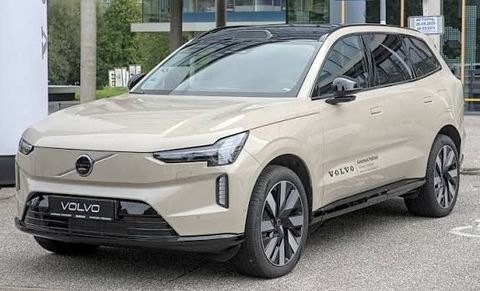
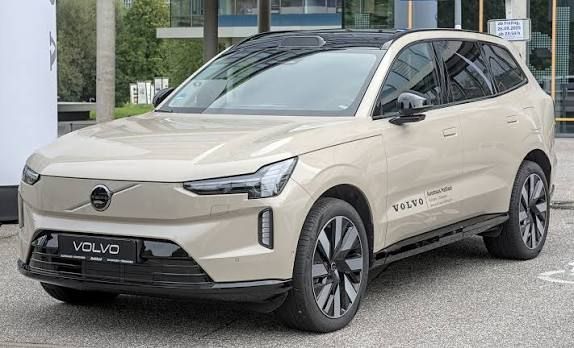
The Volvo EX90 is a large, fully electric SUV designed around passenger space, battery-powered travel, and connected vehicle technology. It belongs to the same broad family-vehicle category as the Volvo XC90, but uses an electric powertrain rather than a combustion engine.
Volvo’s India website presents the EX90 with a six-seat cabin and second-row captain seats. However, some range footnotes refer to a seven-seat configuration. Readers should therefore check the final India specification rather than assuming every international configuration applies locally.
The model exists to bring electric mobility into the large family SUV segment. For a general audience, understanding it involves more than reading a battery figure. Seating, charging access, software, driver assistance, and registration requirements all influence everyday use.
This overview reflects information available on 9 October 2026. The launch is still upcoming on that date, and preliminary specifications should remain clearly identified until Volvo publishes final local documentation.
Why the India Launch Matters
The EX90 is relevant to households researching larger electric vehicles, drivers who regularly travel between cities, and readers following automotive technology. Its arrival adds another model to discussions about how electric SUVs fit Indian roads and travel patterns.
For families, the main questions concern passenger comfort, third-row access, luggage space, and charging during longer journeys. A six-seat layout may suit some travel needs, while households requiring seven seats should verify the actual configuration carefully.
For drivers transitioning from conventional vehicles, charging is an important change in routine. An EV can fit a predictable daily schedule when dependable charging is available. Longer journeys require additional attention to station locations, connector compatibility, and backup stops.
Electric vehicles have no exhaust emissions during driving. Their wider environmental impact still depends on electricity generation, battery production, vehicle manufacturing, and eventual recycling. An electric badge alone does not describe the complete environmental picture.
The launch also highlights a practical issue: advanced hardware needs suitable infrastructure. A vehicle’s stated charging capability does not mean every nearby station can deliver that level of power.
Recent Updates and Launch Status
Autocar India reports that the Volvo EX90 and ES90 are scheduled for their India launch on 12 October 2026. As of this article’s update date, that event has not yet occurred. The scheduled launch date should not be treated as confirmation of immediate deliveries in every city.
A recent development is the appearance of a model-year 2027 EX90 listing on Volvo’s India website. Its specification page lists a Twin Motor powertrain, a nominal 106 kWh battery, and a range figure of up to 625 km. These details provide a reference point, but the website’s qualifications still matter.
Another relevant background development was Volvo’s September 2025 announcement of an updated EX90 with an 800-volt electrical system and upgraded core computing hardware. That announcement falls just outside the preceding 12 months, but helps explain why older international reviews may describe different hardware. It should not replace India-specific documentation.
| Detail | Current reference | What readers should check |
|---|---|---|
| India launch | Reported for 12 October 2026 | Announcement after the event |
| India website listing | Model year 2027 | Final local variant documentation |
| Cabin presentation | Six seats | Range footnotes reference seven seats |
| Battery | 106 kWh nominal | Nominal and usable capacity differ |
| Electric range | Up to 625 km | Preliminary test-based estimate |
Range, Charging, and Everyday Interpretation
Driving range is the distance a vehicle can cover using available battery energy. A laboratory figure helps compare vehicles under a defined procedure, but it is not a promise for every journey.
Road speed, gradients, weather, passenger load, tyre pressure, and cabin cooling can affect energy use. A long highway journey may produce a different result from a slower urban trip. Drivers should leave a reasonable battery reserve rather than planning to reach a charger with almost no charge remaining.
Battery capacity is measured in kilowatt-hours, or kWh. Charging power is measured in kilowatts, or kW. The first describes energy storage; the second describes how quickly energy can be transferred at a particular moment.
Volvo’s India specification page lists approximately 22 minutes for a 10–80% DC charging session under its stated conditions. However, the overview page references different station ratings in its heading and footnote. Treat this duration as an indicative manufacturer figure, and verify the applicable conditions in final documentation.
AC charging generally suits longer parking periods, while DC charging is useful for shorter stops. Actual charging speed depends on the vehicle, station, battery temperature, and charge level. A station’s maximum rating does not mean the battery receives that power throughout the session.
| Planning factor | Practical meaning |
|---|---|
| Starting charge | Sets the available energy for the journey |
| Route conditions | Influence consumption and arrival charge |
| Charger compatibility | Determines whether a connection is suitable |
| Station availability | May change before arrival |
| Backup location | Provides another option if plans change |
Cabin Technology and Safety Basics
Volvo’s India technology page describes Google built-in, including navigation and charging-station discovery. It also explains that Google Maps can filter charging locations using selected criteria. These tools can support planning, although a map listing alone cannot confirm that a connector is working when a driver arrives.
Digital features should be assessed individually. Check which functions are active in India, what connectivity they require, and whether a function depends on a particular software version. Hardware capability and an enabled feature are different things.
Driver-assistance systems can help with selected driving tasks, but drivers must understand their limits. Do not interpret sensors, automated warnings, or steering assistance as permission to stop monitoring the road. Follow the applicable vehicle manual and local traffic rules.
Cabin evaluation should include practical checks. Consider visibility, seat adjustment, third-row entry, child-restraint compatibility, and luggage space with all seats occupied. These details often explain family suitability more clearly than a long feature list.
Indian Regulations and Government Programs
An electric SUV remains subject to applicable vehicle registration, insurance, and road-use requirements. Battery propulsion does not remove the normal responsibilities associated with using a passenger vehicle on public roads.
Section 146 of the Motor Vehicles Act requires insurance covering third-party risks, subject to the Act’s provisions. Electric vehicle insurance research should distinguish this legal requirement from additional protection for the vehicle itself. Battery-related exclusions, deductibles, and charging-equipment coverage require careful reading of the policy wording.
An official government overview states that electric vehicles attract a 5% GST rate. State road-tax treatment is a separate matter. Any exemption may depend on local rules, vehicle category, eligibility limits, and the registration date.
PM E-DRIVE supports specified electric vehicle categories and charging infrastructure. The categories listed in the government’s scheme explanation do not establish a direct incentive for a privately registered EX90. Infrastructure support should not be confused with an individual vehicle entitlement.
The Bureau of Energy Efficiency explains the role of national charging guidelines and central and state authorities. For residential charging, confirm electrical suitability, sanctioned load, permissions, and applicable safety requirements with the relevant professionals and local bodies.
Helpful Tools and Resources
Use resources that answer a specific question rather than relying on one summary page for every detail. Manufacturer documents explain the vehicle; government portals explain public requirements; charging maps help with route preparation.
- Volvo Cars India: Check the EX90 overview, specifications, and locally published updates.
- Volvo EX90 digital manual: Read charging instructions, warning explanations, and driver-assistance limitations for the applicable model year.
- In-car Google Maps: Identify charging locations and review route information supported by the vehicle.
- Charging-network apps: Check connector details, access arrangements, and available station-status information before travel.
- Parivahan and state transport portals: Review registration procedures and current local notifications.
- BEE website: Explore official information about EV charging infrastructure and related guidelines.
A simple energy calculator can also help explain a journey. Multiply distance in kilometres by assumed consumption in kWh per 100 km, then divide by 100. For example, 200 km at an assumed 20 kWh per 100 km requires around 40 kWh of driving energy.
That example is educational, not an EX90 prediction. It excludes charging losses and does not establish the vehicle’s actual efficiency. Battery warranty information should likewise come from the applicable India warranty document, including its duration, distance limit, and conditions.
Frequently Asked Questions
When is the Volvo EX90 India launch?
Autocar India reports a scheduled launch on 12 October 2026. This article was updated on 9 October 2026, so it describes an upcoming event. Check subsequent official announcements for changes and final details.
Is the EX90 fully electric or a hybrid?
The EX90 is fully electric. Its motors use energy stored in a rechargeable battery. It should not be confused with the XC90 or with plug-in hybrid models that combine an engine and electric propulsion.
How many seats does the India EX90 have?
Volvo’s India overview describes six seats with captain seats. Some supporting range text refers to seven seats, so the final local specification is the clearest reference for seating and configuration-specific figures.
Will every journey achieve the stated range?
No. A test-based range figure is a comparison reference. Driving conditions, speed, temperature, load, and other factors affect actual distance. Route planning should include charging access and a suitable reserve.
Does advanced safety technology make it self-driving?
The presence of sensors or driver-assistance functions does not establish autonomous capability. Drivers should follow the manual, monitor conditions, and understand which functions are enabled on their particular vehicle.
Conclusion
The Volvo EX90 India launch introduces a large electric SUV into a market where charging access, digital technology, and family practicality all matter. Understanding the model requires attention to both its published specifications and the conditions attached to them.
As the reported launch approaches, the most useful next references are final India specifications, warranty documents, and current regulatory information. Keep preliminary estimates separate from verified local details, and assess range, charging, seating, and insurance through practical everyday needs.