Ather Konarc Overview – Explore Key Details and Information
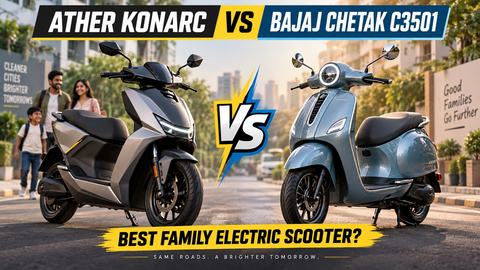
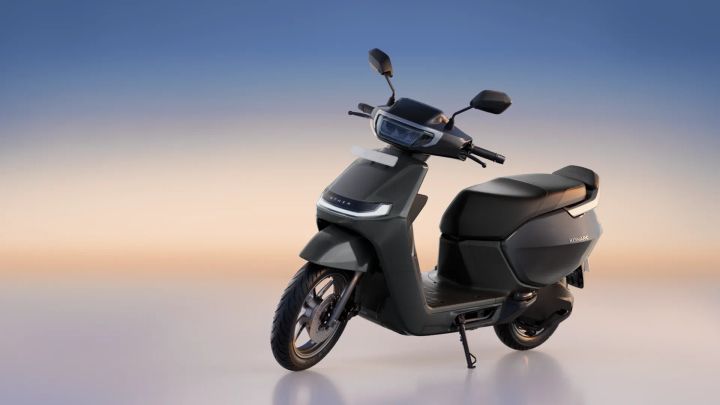
The Ather Konarc is an electric scooter introduced by Bengaluru-based Ather Energy on August 29, 2026, during the company’s fourth Community Day. It represents an important expansion of Ather’s electric two-wheeler portfolio and is the first production scooter based on the company’s new EL platform.
The EL platform has been developed as a scalable electric scooter architecture. This means major structural, electrical and powertrain components can be shared across different scooter formats while allowing Ather to create vehicles for different types of riders.
According to Ather, the platform was developed using data collected from approximately 2.6 million kilometres of real-world riding. The architecture introduces a new chassis, electric powertrain arrangement and electronics system.
The Konarc is positioned primarily as a practical everyday electric scooter rather than a performance-focused model. Its design places emphasis on usable range, storage space, comfortable suspension, connected features and multiple battery configurations.
This approach reflects a broader trend in India’s electric two-wheeler market. Electric scooters are increasingly being designed for regular commuting, family use and everyday urban mobility rather than functioning only as technology-focused alternatives to petrol scooters.
Why the Ather Konarc Matters
Electric two-wheelers have become an important part of India’s transition toward electric mobility. Urban riders frequently deal with short daily trips, traffic congestion, parking limitations and increasing interest in energy-efficient transportation.
The Konarc addresses these requirements by combining different battery capacities with practical scooter dimensions.
One notable feature is its 31-litre under-seat storage compartment, accompanied by approximately 2 litres of front storage. The scooter also uses a 14-inch front wheel and 12-inch rear wheel, while suspension travel measures 90 mm at the front and 100 mm at the rear.
Ather has given the Konarc a 1,352 mm wheelbase, making it longer between the wheels than the company’s earlier scooters. A longer wheelbase can contribute to stable handling, although actual riding behaviour depends on suspension tuning, tyre characteristics, weight distribution and road conditions.
The scooter also uses a steel unibody structure and alloy wheels across the currently detailed Konarc S configurations.
For riders researching an electric scooter, factors such as electric scooter range, EV battery technology, charging time, electric scooter insurance, battery warranty and charging infrastructure are often more useful than examining a single specification.
Battery and Electric Scooter Range Explained
Ather currently lists three Konarc S configurations with different battery capacities.
| Konarc S Configuration | Battery Capacity | IDC Range | Ather TrueRange | Peak Power |
|---|---|---|---|---|
| S 100 | 2.1 kWh | 100 km | 80 km | 4 kW |
| S 125 | 2.7 kWh | 125 km | 100 km | 4.7 kW |
| S 161 | 3.5 kWh | 161 km | 130 km | 4.7 kW |
The specifications above are published by Ather. All three currently listed versions use a permanent-magnet synchronous motor with IP67 protection. Maximum torque is stated at 16 Nm.
The S 100 has a claimed 0–40 km/h acceleration time of 5 seconds, while the S 125 and S 161 are listed at 4.7 seconds. Their stated maximum speed is 70 km/h.
It is important to distinguish between IDC range and expected everyday range.
IDC stands for Indian Driving Cycle. It provides a standardized test figure that helps compare different vehicles under defined conditions.
Ather separately publishes its TrueRange figures. These are 80 km for the S 100, 100 km for the S 125 and 130 km for the S 161.
Actual electric scooter range can vary depending on:
- Riding speed and acceleration
- Traffic conditions
- Rider and pillion weight
- Road gradient
- Ambient temperature
- Tyre pressure
- Riding mode
- Battery temperature
- Frequency of stops and starts
Therefore, certification figures should be treated primarily as standardized reference numbers rather than guaranteed everyday distances.
Range Comparison at a Glance
IDC Range
S 100 | ██████████ 100 km
S 125 | ████████████▌ 125 km
S 161 | ████████████████ 161 km
Ather TrueRange
S 100 | ████████ 80 km
S 125 | ██████████ 100 km
S 161 | █████████████ 130 km
Ather has also announced a future Konarc S version with an IDC rating of 200 km, but that configuration is not part of the three currently detailed specifications. Ather indicates that the 200 km version is expected around Q3 FY28.
Charging Technology and Charging Time
Charging convenience is an important part of electric scooter ownership because battery capacity alone does not explain everyday usability.
The Konarc S models include a 450W onboard charger. With this setup, Ather lists a 0–80% home charging time of approximately:
- S 100: 4 hours
- S 125: 4 hours 30 minutes
- S 161: 5 hours 40 minutes
Ather also describes a combined charging arrangement that adds another 450W capacity. Under this configuration, the published 0–80% figures fall to approximately 2 hours for the S 100, 2 hours 25 minutes for the S 125 and 3 hours 10 minutes for the S 161.
Ather Grid compatibility is listed for the S 125 and S 161, while the S 100 can access it through an additional configuration. The company lists Grid charging additions of approximately 13 km in 10 minutes for the S 100 and 15 km in 10 minutes for the S 125 and S 161.
Actual charging time can change because of battery temperature, available electrical power, battery state of charge and charging-system conditions.
Display, Connectivity and Everyday Features
The Konarc uses different dashboard configurations depending on the version.
The S 100 receives a 4.2-inch DeepView display, while the S 125 and S 161 use a 7-inch DeepView display.
The S 125 and S 161 also include several connected functions such as:
- 4G LTE and GNSS connectivity
- Call and music controls
- Remote charging status
- Find My Scooter
- Tow and theft notifications
- Ride Stories
- Over-the-air updates
Ather also lists reverse assistance and AutoHold functions across the current Konarc S specifications, although implementation differs by configuration.
These connected functions illustrate how modern electric scooters increasingly combine vehicle hardware with digital platforms. For riders, this means evaluating both mechanical specifications and software-related features when studying an electric scooter.
Braking, Wheels and Rider Safety
The S 100 uses drum brakes at the front and rear.
The S 125 and S 161 use a 220 mm front disc brake and a 130 mm rear drum brake.
The motor and battery are listed with IP67 ingress protection, indicating protection against dust and specified levels of water exposure under standardized testing conditions. IP ratings should not be interpreted as permission for unnecessary immersion or operation outside the manufacturer’s guidelines.
Ather has also discussed newer technologies such as AEBS, an electronic braking-related system, and MagicKey as part of the broader Konarc technology package. Availability can depend on configuration and rollout timing, so individual feature specifications should be checked against the exact Konarc version being researched.
Recent Ather Konarc Updates
The Konarc moved from teaser stage to official introduction during August 2026.
| Date | Development |
|---|---|
| August 5, 2026 | Ather publicly revealed the Konarc name ahead of its Community Day introduction |
| August 29, 2026 | Konarc officially introduced at Ather Community Day |
| September 2026 | S 125 and S 161 deliveries scheduled to begin |
| Q4 FY27 | S 100 availability expected |
| Around Q1 FY28 | Konarc Z configurations expected |
| Around Q3 FY28 | 200 km IDC Konarc S expected |
Ather’s official FAQ currently lists the S 125 and S 161 as the configurations available first in selected markets. The company states that additional Konarc S and Konarc Z versions will follow later.
Because future production schedules can change, later variants should be regarded according to Ather’s current published timeline rather than as fixed dates.
EV Laws and Policies in India
Electric scooters in India operate under central vehicle regulations as well as state-level road-tax policies.
One important programme is the PM Electric Drive Revolution in Innovative Vehicle Enhancement, or PM E-DRIVE, Scheme.
The Ministry of Heavy Industries states that registered electric two-wheelers with qualifying advanced batteries can be eligible under the programme. Both privately owned and corporate-owned registered electric two-wheelers are included within the eligible category.
On August 10, 2026, the government published an amendment extending the terminal date for electric two-wheelers under PM E-DRIVE to March 31, 2028.
Eligibility is model-specific and subject to programme requirements. Therefore, the presence of an electric scooter in the wider market should not automatically be interpreted as confirmation of a particular incentive. The official PM E-DRIVE model database should be checked for current eligibility.
Electric vehicles also receive a 5% GST rate in India. The GST Council has previously confirmed the reduction of GST on electric vehicles to 5%.
For vehicle registration, battery-operated private vehicles use white registration characters on a green background. Battery-operated transport vehicles use yellow characters on a green background.
The central government has also exempted battery-operated vehicles from specified registration-certificate and new-registration-mark fees. State road-tax treatment can differ, so the applicable state transport portal should be checked for the current local rules.
Helpful EV Tools and Resources
Several digital resources can help riders understand electric scooter range, charging infrastructure, registration rules and EV policy India.
- Ather App: Provides vehicle information and connected functions on compatible configurations.
- Ather Grid: Helps identify compatible charging points within Ather’s charging network.
- PM E-DRIVE Portal: Provides programme notifications, eligibility information and policy updates.
- Parivahan Portal: Useful for electric vehicle registration and transport-related information.
- State Transport Department Portals: Useful for checking local road-tax and registration rules.
- GST Council Portal: Provides official GST-related notifications and updates.
- Navigation Applications: Useful for identifying EV charging stations and planning routes.
- Electric scooter insurance documents: Useful for understanding an EV insurance policy, battery-related protection, accidental damage conditions and roadside-assistance terms.
When researching electric scooter insurance, it is useful to examine policy wording carefully because battery protection, electrical components, water-related damage and roadside assistance conditions can differ between insurance plans.
Frequently Asked Questions
What is the range of the Ather Konarc?
The currently listed Konarc S variants have IDC ratings of 100 km, 125 km and 161 km. Ather publishes corresponding TrueRange figures of approximately 80 km, 100 km and 130 km. A 200 km IDC configuration is planned for a later period.
What battery capacities are available in the Ather Konarc?
The three currently detailed configurations use 2.1 kWh, 2.7 kWh and 3.5 kWh battery packs. All are listed with aluminium battery casings and IP67 protection.
How long does the Ather Konarc take to charge?
With the standard 450W onboard charger, Ather lists approximately 4 hours to 5 hours 40 minutes for 0–80%, depending on battery configuration. A combined charging setup reduces those published times.
Does the Ather Konarc support connected features?
Yes. The S 125 and S 161 include functions such as 4G LTE/GNSS connectivity, remote charging status, Find My Scooter, ride information and OTA updates. Feature availability differs by configuration.
Is the Ather Konarc covered by PM E-DRIVE?
PM E-DRIVE includes qualifying registered electric two-wheelers with advanced batteries, and the electric two-wheeler timeline currently extends to March 31, 2028. However, eligibility should always be confirmed for the specific vehicle configuration through the official programme database.
Conclusion
The Ather Konarc represents a new phase in Ather Energy’s electric scooter strategy. Its EL platform, multiple battery configurations, 31-litre storage area, connected features, 14-inch front wheel and range-focused variants indicate a stronger emphasis on practical everyday electric mobility.
For general research, the most important factors are not limited to the headline IDC range. Battery capacity, expected real-world range, electric scooter charging time, charging infrastructure, battery warranty, electric scooter insurance, vehicle registration rules and state EV policies all influence everyday ownership.
The Konarc S currently provides 100 km, 125 km and 161 km IDC configurations, while additional versions are scheduled for later periods. As with any newly introduced electric vehicle, specifications and rollout timelines can evolve, so manufacturer information and official government portals remain the most reliable reference points for future updates.