Honda ALPHA EV 2027: Expected Price, Range, Features & India Launch Explained
The Honda ALPHA EV 2027 is an upcoming electric SUV developed by Honda for India and international markets. It represents an important development in Honda's electric mobility strategy, with India selected as the first market for its introduction and the future global manufacturing base.
Officially named Honda ALPHA on November 3, 2026, the vehicle is scheduled to make its global debut in India on December 2, 2026. Its market introduction is expected in 2027.
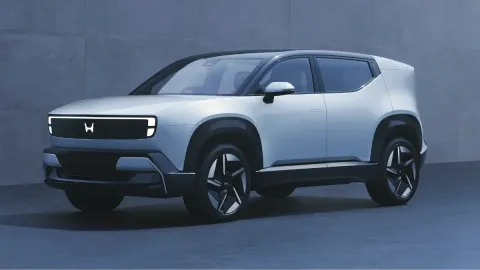
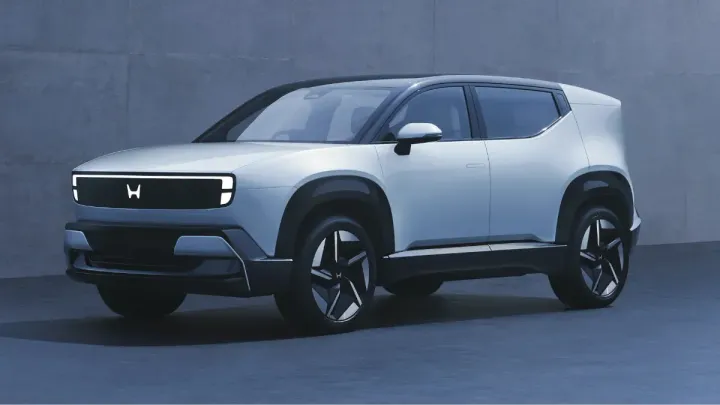
The electric SUV was initially presented as the Honda 0 α concept at the Japan Mobility Show in October 2025. The production model is expected to incorporate elements of its futuristic design while addressing everyday mobility requirements.
This article explains the Honda ALPHA EV's expected price, driving range, battery technology, features, charging infrastructure, government policies and India launch timeline.
What Is the Honda ALPHA EV and Why Is Honda Developing It?
The Honda ALPHA is a battery-electric SUV designed to operate entirely through electric propulsion. Unlike conventional petrol vehicles, battery-electric cars use energy stored in rechargeable batteries to power an electric motor.
Honda is developing the ALPHA as part of its broader transition towards electrified mobility and more efficient vehicle technologies.
The model is significant because Honda has traditionally been associated with petrol and hybrid passenger vehicles in India. The ALPHA introduces a dedicated electric SUV into its Indian product portfolio.
According to Honda Cars India, the ALPHA name represents a new beginning. The vehicle is intended to combine advanced technology, contemporary styling and everyday driving practicality.
Its development also reflects changing consumer expectations. Increasing attention towards energy efficiency, charging accessibility and lower tailpipe emissions is encouraging manufacturers to expand their electric vehicle portfolios.
The ALPHA is expected to compete in India's growing mid-size electric SUV segment, where manufacturers are introducing vehicles with increasingly advanced battery management, digital interfaces and driver-assistance technologies.
Why the Honda ALPHA EV Matters for the Indian Automotive Market
India's electric passenger vehicle market is developing as charging networks expand and more manufacturers introduce dedicated electric platforms.
The Honda ALPHA is relevant to this transition for several reasons.
Local manufacturing and automotive development
Honda has confirmed that India will become the global production base for the ALPHA. Domestic manufacturing may strengthen component sourcing, technical expertise and supply-chain development.
Industry reporting has identified Honda's Tapukara facility in Rajasthan as the expected production location, although factory-specific production arrangements should be verified through Honda's announcements.
Electric mobility for daily commuting
Electric SUVs are increasingly being considered for city commuting, highway travel and family transportation.
For the ALPHA, practical considerations will include usable battery capacity, cabin comfort, passenger space, charging compatibility and real-world driving efficiency.
Competition in the electric SUV segment
The Honda ALPHA is expected to enter a competitive category alongside models such as the Hyundai Creta Electric, Mahindra BE 6 and Maruti Suzuki e Vitara.
These vehicles represent different approaches to driving range, vehicle design, connected technology and battery management.
Honda's final specifications will determine how the ALPHA compares with established alternatives.
Environmental considerations
Battery-electric vehicles produce no tailpipe exhaust emissions during operation. Their overall environmental impact, however, depends on electricity generation, battery production, manufacturing processes and vehicle usage.
Consequently, vehicle efficiency and battery durability are important measures when evaluating electric mobility.
Honda ALPHA EV 2027: Expected Price, Battery Range and Specifications
Honda has not officially announced the production ALPHA's final price, battery capacity, certified driving range, motor output or charging duration as of November 11, 2026.
Automotive publications have reported different indicative price expectations, broadly extending from approximately ₹16 lakh to ₹30 lakh.
These are independent market estimates rather than Honda-confirmed figures.
Similarly, industry reports have discussed potential battery capacities of approximately 65–75 kWh and a front-wheel-drive configuration. These technical details remain unverified.
| Specification | Current Information |
|---|---|
| Model | Honda ALPHA |
| Vehicle category | Electric SUV |
| Global debut | December 2, 2026 |
| Expected market introduction | 2027 |
| Indicative price range | ₹16–30 lakh, unofficial |
| Battery capacity | Not officially announced |
| Certified driving range | Not officially announced |
| Battery technology | LFP reported, unconfirmed |
| Motor configuration | Front-wheel drive anticipated |
| Charging duration | Not officially announced |
| Manufacturing country | India confirmed |
Understanding battery capacity and driving range
Battery capacity is measured in kilowatt-hours, or kWh. A larger battery can store more energy, but driving range also depends on vehicle efficiency.
Actual energy consumption is influenced by vehicle weight, driving speed, ambient temperature, road gradients and air-conditioning usage.
For example, a hypothetical 65 kWh battery at an efficiency of 6 km/kWh would provide approximately 390 km under those assumptions.
This is an illustrative calculation, not a Honda ALPHA driving-range prediction.
Official certification figures and independent road testing will provide a more meaningful assessment once the production vehicle is revealed.
Expected Exterior Design, Interior and Safety Technology
The Honda ALPHA concept introduced a distinctive SUV silhouette with an upright stance, modern lighting elements and a relatively spacious-looking body structure.
The production design is expected to retain some of these characteristics.
Reports based on development vehicles suggest several potential interior features:
A central touchscreen infotainment display.
A separate digital instrument cluster.
Physical controls for selected climate functions.
A contemporary steering-wheel layout.
Regenerative braking controls.
A cabin designed around everyday passenger comfort.
These details are based on prototype observations and industry reporting. Honda has not confirmed the complete production equipment list.
Safety technology will also be an important consideration.
Potential areas of interest include electronic stability control, multiple airbags, battery protection systems, parking assistance and advanced driver-assistance features.
However, specific ADAS capabilities, crash-test ratings and active safety equipment cannot be treated as confirmed until Honda publishes the final specifications.
Battery thermal management is another relevant factor because Indian driving conditions involve considerable temperature variation.
Effective thermal management helps maintain battery operating conditions during repeated charging, prolonged driving and exposure to high ambient temperatures.
Recent Honda ALPHA EV Updates: 2025–2026 Timeline
The ALPHA has progressed from a publicly displayed concept into a development vehicle undergoing Indian road testing.
October 29, 2025 — Concept introduction
Honda presented the 0 α electric SUV concept at the Japan Mobility Show 2025, outlining its approach to compact and mid-size electric mobility.
March 16, 2026 — Indian road validation
Reports indicated that Honda had begun evaluating the prototype on Indian roads. Testing focused on vehicle behaviour across different driving environments.
October 2026 — Production debut timeline
Automotive publications reported that the production version would be introduced in India on December 2, 2026.
Camouflaged development vehicles were also observed during testing.
November 3, 2026 — Official Honda ALPHA name announced
Honda Cars India formally confirmed the ALPHA name, its global debut date and India's role as the model's future global production base.
December 2, 2026 — Scheduled global debut
The forthcoming presentation is expected to provide greater clarity regarding vehicle design, equipment and technical specifications.
2027 — Expected market introduction
Honda plans to introduce the ALPHA to the Indian market in 2027. The precise commercial introduction date remains subject to confirmation.
Indian Government EV Policies and Regulations
The Honda ALPHA will operate within India's electric vehicle regulatory framework, which includes taxation, charging infrastructure, safety requirements and manufacturing policies.
GST treatment for electric vehicles
Battery-electric vehicles in India currently attract a 5% Goods and Services Tax rate. This preferential classification is intended to encourage electric mobility.
Vehicle registration charges, road tax treatment and other applicable requirements may differ by state.
PM E-DRIVE programme
The PM Electric Drive Revolution in Innovative Vehicle Enhancement programme supports electric mobility and charging infrastructure development.
In August 2026, the programme's allocation was increased to ₹11,900 crore, with its implementation extended to March 2028 for eligible categories.
However, the programme does not provide a general direct passenger-car incentive for private electric SUVs such as the Honda ALPHA.
Its infrastructure provisions can still contribute to a more accessible charging ecosystem.
Charging infrastructure guidelines
The Ministry of Power has established guidelines addressing electric vehicle charging infrastructure, installation and operations.
These provide a framework for public charging development and related technical arrangements.
Vehicle safety and battery compliance
Electric passenger vehicles in India must satisfy applicable automotive safety, battery and vehicle approval requirements.
The ALPHA's production compliance details will become clearer as its introduction approaches.
Government policies may evolve, so the latest official notifications should be consulted when evaluating regulatory implications.
Helpful Tools and Resources for Understanding the Honda ALPHA EV
Several digital resources can help readers understand electric mobility and track verified vehicle developments.
Honda Cars India official website
The manufacturer's website is the primary reference for confirmed announcements, specifications, technical documentation and launch information.
EV Yatra application
Developed by the Bureau of Energy Efficiency, EV Yatra provides information about public charging locations, connector types and related charging details where available.
It can assist with charging-station research and route preparation.
Bureau of Energy Efficiency
The BEE website provides information about electric mobility initiatives, charging infrastructure guidelines and energy-efficiency programmes.
PM E-DRIVE portal
The government portal explains programme eligibility, policy developments and charging infrastructure initiatives.
EV energy consumption calculator
A simple spreadsheet can estimate theoretical driving range using battery capacity and vehicle efficiency.
Formula:
Estimated range = Usable battery capacity × Efficiency in km/kWh
The calculation provides an illustration and should not be interpreted as a certified range figure.
Frequently Asked Questions About the Honda ALPHA EV 2027
1. When will the Honda ALPHA EV launch in India?
Honda has officially scheduled the ALPHA's global debut for December 2, 2026, in India. Its market introduction is planned for 2027, although the exact retail availability date has not been confirmed.
2. What is the expected Honda ALPHA EV price in India?
Independent automotive publications have published varying estimates, approximately between ₹16 lakh and ₹30 lakh. Honda has not confirmed official pricing, and actual positioning will depend on production specifications and variants.
3. What will be the Honda ALPHA EV driving range?
The certified driving range has not been announced. Battery capacity and efficiency remain unconfirmed, so specific driving-range claims should be considered speculative until official technical information becomes available.
4. Will the Honda ALPHA support fast charging?
Fast-charging capability is anticipated for a modern electric SUV, but Honda has not confirmed the production model's maximum DC charging power, charging curve or charging duration. These details require official verification.
5. Is the Honda ALPHA EV manufactured in India?
Honda has confirmed India as the future global production base for the ALPHA. Industry reporting points to the company's Tapukara manufacturing facility in Rajasthan, although detailed production arrangements remain subject to official confirmation.
Conclusion: What to Expect from the Honda ALPHA EV in 2027
The Honda ALPHA EV represents a significant development in Honda's electric vehicle strategy and India's expanding electric SUV market.
Its confirmed global debut on December 2, 2026, and planned introduction in 2027 establish a clear development timeline.
India's role as the global production base also highlights the country's growing importance in electric vehicle manufacturing.
The most important unanswered questions concern battery capacity, certified driving range, charging performance, safety equipment and final pricing.
Until Honda publishes the production specifications, these details should remain clearly distinguished from industry expectations.
For readers following upcoming electric SUVs in India, the Honda ALPHA provides an important example of how established manufacturers are adapting vehicle design, electrification technology and domestic manufacturing strategies to changing mobility requirements.