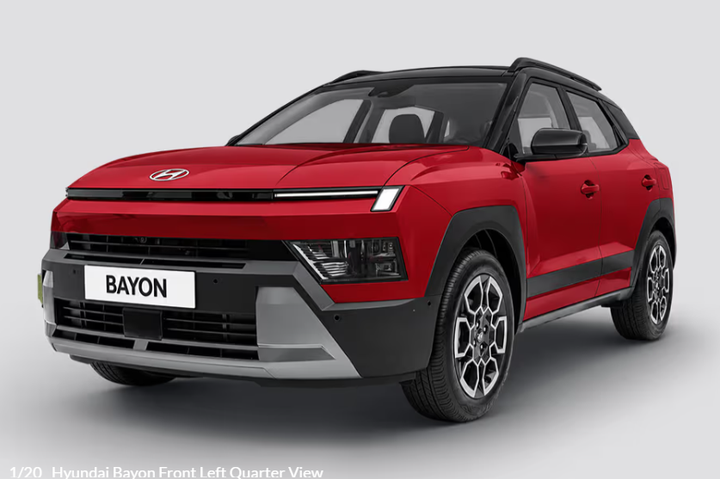
Hyundai Bayon Basics: What You Need to Know About This Compact SUV
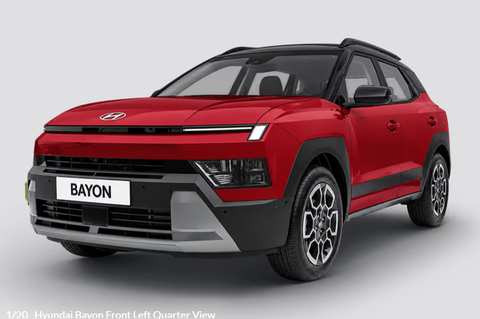
The Hyundai Bayon is an SUV nameplate used by Hyundai in different markets. Its name comes from Bayonne, a city in the French Basque Country. Hyundai’s Indian introduction places particular emphasis on connected technology and everyday usability.
The basic idea behind a compact SUV is straightforward: combine manageable exterior dimensions with practical passenger accommodation, luggage space and an elevated driving position. This format addresses ordinary journeys, including commuting, school travel and weekend trips.
However, the Bayon name does not describe one universal specification. An older European vehicle, a newly announced European generation and an India-specific version can have different engines, equipment and dimensions.
This guide focuses on Hyundai’s India-specific announcements available on the update date. European information appears only where explicitly identified, helping readers avoid combining unrelated specifications.
Understanding the Indian powertrain
Hyundai’s announcement dated 23 October 2026 identifies a four-cylinder, 1.5-litre MPi petrol engine producing 115 PS and 143.8 Nm. Transmission choices are a six-speed manual and an Intelligent Variable Transmission, or iVT. hyundai.com
For beginners, engine power broadly describes performance potential, while torque describes twisting force. Neither figure alone establishes how comfortable, economical or responsive a vehicle feels during everyday driving.
Importance: Why the Bayon Matters Today
A compact SUV is relevant to households balancing several needs within one vehicle. Drivers may want convenient access, space for relatives, manageable parking and technology that makes unfamiliar routes easier to navigate.
The practical question is whether the vehicle matches those routines. Someone travelling through crowded streets may prioritise visibility and low-speed control. A family covering longer distances may place greater weight on seating support, luggage access and rear-seat comfort.
Use a simple evaluation checklist:
- Check the driving position and visibility around the front pillars.
- Assess rear-seat access for children and older passengers.
- Confirm that regular luggage fits without blocking visibility.
- Try frequently used controls while the vehicle is stationary.
- Review tyre specifications and the vehicle warranty documentation.
These checks turn a broad category description into a more useful assessment of daily suitability.
Fuel efficiency and ownership planning
Fuel efficiency should be interpreted alongside journey patterns. Short trips, heavy traffic, air-conditioning use, passenger load and driving style can change actual fuel consumption.
A practical fuel calculator begins with distance and observed efficiency. For example, 900 kilometres divided by a hypothetical 15 kilometres per litre equals 60 litres. This is an illustration, not a verified Bayon mileage figure.
Car insurance also belongs in ownership planning. Compare coverage, exclusions, deductibles and insured declared value, rather than considering the insurance premium in isolation. IRDAI’s educational guidance highlights these comparison points. IRDAI
Recent Updates: Developments During the Past Year
Recent Bayon information needs careful attention to dates and geography. Announcements from one country should not automatically be applied to vehicles registered elsewhere.
September 2026: Indian introduction
Hyundai’s Indian material published on 16 September 2026 introduced the Bayon name and explained its connection with Bayonne. The announcement framed the vehicle around technology and changing mobility needs. hyundai.com
October 2026: Connected cabin technology
Hyundai’s India-specific unveiling described a generative AI voice assistant, a Connected Car Navigation Cockpit, dual 12.3-inch curved displays and more than 70 Bluelink connected features. It also described over-the-air updates covering up to 19 controllers. hyundai.com
These announcements indicate a stronger role for software inside the cabin. For an owner, the useful questions concern compatible devices, connectivity requirements, account permissions and which functions belong to the selected variant.
An AI voice assistant should be treated as an interface for information and supported functions. Drivers should verify important responses and avoid interacting with complex menus while moving.
21 October 2026: Safety details
Hyundai announced standard equipment including six airbags, electronic stability control, tyre-pressure monitoring and ISOFIX anchorage points. Its wider safety package includes Hyundai SmartSense driver assistance, with equipment depending on specification. hyundai.com
A feature list should always be checked against the variant documentation. A headline describing the full model range does not establish that every version has every system.
23 October 2026: Engine and transmission information
Hyundai’s performance announcement confirmed the Indian petrol powertrain and transmission choices. It also described selectable driving modes and additional iVT-related functions. These details should be read alongside the final variant specification. hyundai.com
European developments
On 11 December 2025, Hyundai announced revised UK Bayon trims and a 90 PS, 1.0-litre turbocharged petrol engine. In October 2026, Hyundai separately introduced an all-new European Bayon and stated that a hybrid would join that range in 2027. hyundai.news
The European hybrid announcement does not establish an Indian hybrid introduction. Similarly, the UK engine description should not replace the Indian 1.5-litre specification.
A practical reference table
| Topic | India-specific reference | What readers should verify |
|---|---|---|
| Engine | 1.5-litre MPi petrol | Exact variant documentation |
| Transmission | Six-speed manual or iVT | Gearbox fitted to the vehicle |
| Connected technology | AI voice interface and Bluelink announced | Compatibility and activation terms |
| Safety | Six airbags and ESC announced as standard | Variant-specific assistance features |
| Overseas developments | European hybrid planned for 2027 | Separate Indian confirmation |
The engine, technology and safety entries above summarise Hyundai’s announcements rather than independent road-test findings. hyundai.com
Laws and Policies: Indian Requirements
For Indian readers, vehicle rules are a separate topic from equipment preferences. Registration, insurance and emissions documentation remain relevant regardless of how much connected technology a vehicle contains.
Compulsory third-party insurance
Section 146 of the Motor Vehicles Act establishes the requirement for insurance against third-party risk when a motor vehicle is used in a public place, subject to statutory exceptions. ____________
Comprehensive motor insurance generally combines third-party liability protection with own-damage protection, subject to policy terms. Additional protections, exclusions and deductibles need individual review. A broad policy label does not guarantee that every incident is covered. IRDAI
When reviewing documents, check:
- The registration number and insured vehicle details.
- The beginning and end dates of each coverage component.
- The insured declared value and applicable deductibles.
- Exclusions and conditions relevant to the vehicle’s use.
This is general information; the policy wording determines the contractual protection.
Registration and pollution documentation
Use official transport portals to check registration-related requirements and Pollution Under Control documentation. The Ministry of Road Transport and Highways explains that a valid PUC certificate becomes necessary after the first year from initial registration under Rule 115(7). State and Union Territory authorities implement these provisions. Press Information Bureau
Keep the applicable renewal date recorded. A petrol engine’s original certification does not remove the need to maintain the required documents during ownership.
Crash ratings and safety claims
Bharat NCAP publishes vehicle safety assessments based on testing. Hyundai’s statement that the Bayon is engineered for five-star Indian safety standards describes a design objective; it should not be presented as a published five-star result. Check the assessment body’s vehicle-specific record before quoting a rating. bncap.in
For practical interpretation, distinguish three things: equipment fitted to the vehicle, the manufacturer’s engineering statements and independently published assessment results. Each answers a different question about safety.
Tools and Resources for Clearer Research
A small set of reliable resources can help readers organise information without relying on promotional summaries.
| Resource | Main purpose | Useful details to check |
|---|---|---|
| Hyundai India’s Bayon pages | Official model information | Engine, variant equipment and dated announcements |
| Owner’s manual and warranty booklet | Operating instructions and warranty terms | Tyre pressure, maintenance intervals and exclusions |
| Parivahan and VAHAN portals | Transport documentation | Registration details and applicable records |
| Official PUC portal | Emissions certificate information | Certificate status and recorded validity |
| Bharat NCAP website | Published safety assessments | Tested model, variant applicability and assessment date |
| IRDAI policyholder pages | Motor insurance education | Coverage types, deductibles and insured declared value |
Hyundai’s model pages, government transport portals, Bharat NCAP and IRDAI provide the relevant starting points for these checks. Hyundai India
Simple templates and calculators
A comparison spreadsheet can record the variant, transmission, essential equipment, warranty terms and document dates. Keep source links beside technical entries so they can be checked again when information changes.
For fuel tracking, record distance travelled and litres added across several refills. Longer records are usually more informative than a single dashboard reading.
A maintenance calendar can hold inspection intervals, tyre checks, insurance expiry and pollution-document reminders. Use the actual vehicle handbook and document dates rather than copying another owner’s schedule.
For connected apps, review permissions and account access. Remove personal information and disconnect paired accounts when the vehicle changes hands.
Frequently Asked Questions
Is the Hyundai Bayon an electric vehicle?
The India-specific powertrain announcement covered here describes a 1.5-litre petrol engine. The European hybrid planned for 2027 is a separate development and should not be confused with a battery-electric vehicle. hyundai.com
Does the Indian Bayon have an automatic transmission?
Yes. Hyundai lists iVT alongside the six-speed manual. Confirm the transmission associated with the exact variant, since a model range can include several equipment combinations. hyundai.com
Are Indian and European Bayon specifications identical?
No. Hyundai’s regional announcements describe different powertrains and equipment. Use the country-specific specification, model year and variant when comparing engines, screens, safety technology or luggage measurements. hyundai.com
Does driver assistance mean the vehicle drives itself?
No. Driver assistance supports selected driving tasks within operating limits. The driver remains responsible for supervising the road and responding appropriately. Read the handbook before using unfamiliar systems, including lane support and cruise-control functions.
How should readers interpret a five-star safety statement?
Look for a published assessment identifying the tested vehicle and applicable versions. An engineering target or marketing description is insufficient evidence of an awarded rating. Bharat NCAP’s assessment records are the appropriate Indian reference. bncap.in
Conclusion
The Hyundai Bayon is best understood through its local specification and intended everyday role. For Indian readers, the relevant starting points are the announced petrol powertrain, transmission choices, safety equipment and connected cabin.
A clear assessment also includes fuel tracking, car insurance, vehicle warranty terms and statutory documentation. Verify dated information, distinguish overseas developments and evaluate practical needs before drawing conclusions about suitability.