MG Hector Hawk India Launch – Complete Overview
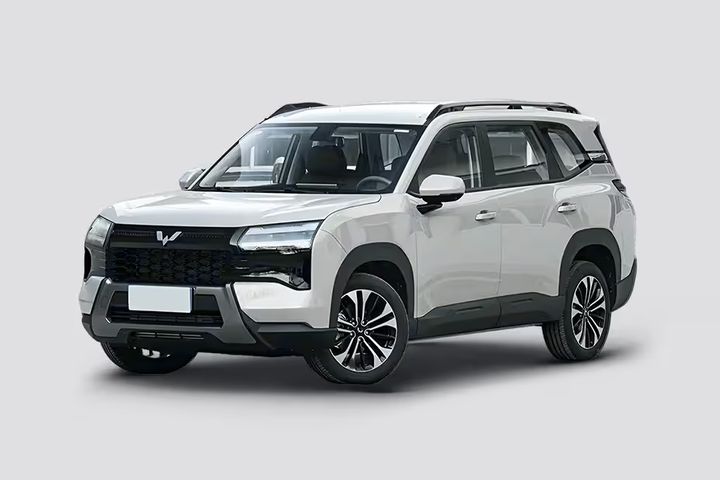
The MG Hector Hawk is an upcoming electrified SUV expected to join JSW MG Motor India’s range in 2026. Current automotive reports link the vehicle to the Wuling Starlight 560, a three-row SUV from the broader SAIC-GM-Wuling ecosystem. It is expected to reach India in both plug-in hybrid electric vehicle, or PHEV, and battery-electric vehicle, or EV, forms. India-specific specifications have not yet been fully announced by JSW MG Motor India.
The model is significant because it may become one of the first vehicles connected with MG ADAPT, the company’s new multi-new-energy-vehicle architecture. JSW MG Motor India officially introduced MG ADAPT on 16 July 2026. The platform supports EV, hybrid electric vehicle, PHEV and range-extender electric vehicle technologies. MG also stated that one EV and one PHEV based on this architecture are planned for FY 2026–27.
The “Hector Hawk” name has appeared widely in automotive reporting, while MG’s July platform announcement focused on the underlying technology. Final specifications, variants and launch timing can still change before the product announcement. In simple terms, the EV would rely entirely on battery power, while the PHEV would combine a rechargeable battery, electric motor and petrol engine.
Why the MG Hector Hawk Matters in India
India’s passenger-vehicle market is moving toward a broader mix of electrified powertrains. Battery EVs remain important, but plug-in hybrids can address a different use case: regular local travel on battery power combined with a combustion engine for longer journeys.
This makes the expected Hector Hawk relevant to households that combine city travel with intercity journeys. A PHEV can cover part of its travel in electric mode when charged regularly, while retaining a petrol engine. Actual efficiency depends on charging habits, traffic, speed, temperature and vehicle load.
The EV version removes the combustion engine and therefore depends more directly on battery capacity, charging access and route planning. Practical topics include home charging, public EV charging network coverage, battery warranty terms, vehicle insurance, charging time and real-world range.
The Hector Hawk could also broaden discussion around vehicle finance. People comparing a PHEV and an EV may use an auto loan or car loan EMI calculator to understand monthly repayment structures. The relevant assessment should include the down payment, interest rate, loan tenure, insurance, registration and expected energy use rather than focusing on one headline figure.
Expected Technology Overview
| Area | Expected PHEV | Expected EV |
|---|---|---|
| Propulsion | Petrol engine + electric motor | Electric motor |
| Battery | Around 20.5 kWh, based on overseas specification | Around 69.2 kWh, based on overseas specification |
| Electric-only range | Around 125 km under overseas test claims | Around 530 km under CLTC claim |
| Seating | Expected three-row, seven-seat layout | Expected three-row layout |
| Platform direction | MG ADAPT-linked electrified architecture | MG ADAPT-linked electrified architecture |
| India specification | Awaiting final confirmation | Awaiting final confirmation |
Autocar India reports that the overseas-related PHEV configuration uses a 1.5-litre petrol engine with a 20.5 kWh battery and has a claimed 125 km electric-only range. The related EV configuration uses a 69.2 kWh battery and a front-mounted motor, with a 530 km CLTC claim. These figures should not be treated as final India-certified numbers until JSW MG Motor India publishes the local specification.
Simple Powertrain Pathway
Conventional petrol → Hybrid → Plug-in hybrid → Full EV
Engine dominant → Engine + motor → Rechargeable battery + engine → Battery + motor only
This pathway shows why PHEVs sit between conventional hybrids and full EVs. A normal hybrid generally manages its smaller battery internally. A plug-in hybrid can be charged externally and can travel a meaningful distance using electric propulsion. A full EV has no petrol engine.
Recent Updates and 2026 Launch Timeline
The Hector Hawk story developed through several stages during 2026.
In February 2026, test vehicles linked to MG’s upcoming plug-in hybrid SUV were reported in India, and by March the Starlight 560 design had reportedly been patented locally.
On 16 July 2026, JSW MG Motor India officially unveiled MG ADAPT, a flexible architecture supporting EV, HEV, PHEV and REEV configurations. MG also detailed its dedicated hybrid engine, battery system, integrated electric drive unit and multiple automatic operating modes.
On 30 July 2026, Autocar India reported that an EV test vehicle related to the Starlight 560 had been spotted and that the Indian model was expected to use the Hector Hawk name. The report also pointed to both PHEV and EV versions.
As of 12 August 2026, there is a small inconsistency in published launch dates. Autocar India currently lists 26 August 2026, while CarWale’s upcoming-model listing points to 28 August 2026. Therefore, the safest factual description is that the Hector Hawk is expected in late August 2026, with the precise date best confirmed through JSW MG Motor India’s official communication.
Expected Features and Safety Technology
The India equipment list is still awaiting full confirmation. Based on the related international vehicle and recent test reports, the Hector Hawk may include a digital instrument display, a large infotainment screen, connected-car functions, panoramic roof, ventilated front seats, climate control, tyre-pressure monitoring, multiple airbags, parking assistance and advanced driver-assistance technology.
ADAS can assist with functions such as braking, lane positioning and cruise control, but it does not replace an attentive driver. Safety equipment can differ across variants, so the final India specification should be checked directly.
Laws, Regulations and Government Policy in India
Any EV or PHEV introduced in India must comply with applicable homologation and Central Motor Vehicle Rules requirements, along with relevant electrical, battery and charging standards.
Bharat NCAP provides a separate consumer-facing safety assessment for eligible M1 passenger vehicles with gross vehicle weight up to 3,500 kg. It evaluates adult occupant protection, child occupant protection and safety-assist technologies. Bharat NCAP is voluntary and sits above basic regulatory roadworthiness requirements. A Hector Hawk Bharat NCAP rating should therefore be considered only if and when an official test result is published.
Tax treatment also differs by powertrain. The GST Council has maintained a 5% GST category for electrically operated vehicles. A PHEV is classified differently from a pure EV, so the tax outcome should be checked against the final homologated category and prevailing rules at launch.
The PM E-DRIVE programme is another important part of India’s electric-mobility policy. Current government information describes support for categories such as electric two-wheelers, three-wheelers, buses, trucks, ambulances and public charging infrastructure. Private electric passenger cars are not listed as a direct demand-incentive category under the scheme. The programme has been extended to 31 March 2028, while timelines vary for individual vehicle categories.
Road tax and registration treatment can differ by state or union territory. VAHAN provides official vehicle registration and motor-vehicle tax information, making the applicable state transport rules important when comparing an EV and PHEV.
Tools and Resources for Research
Several neutral tools can help readers evaluate the Hector Hawk once final specifications are published.
- JSW MG Motor India website: Useful for official specifications, brochures, variant details and announcements.
- Bharat NCAP portal: Useful for checking an official crash-test rating if the model is assessed under the programme.
- Parivahan and VAHAN portals: Relevant for vehicle registration details and transport records.
- EV charging maps: Charging-network apps and mapping platforms can help identify compatible charging stations along regular routes.
- Car loan EMI calculator: Useful for comparing loan tenure, interest rate and monthly repayment under different vehicle finance scenarios.
- Car insurance research tools: Useful for understanding comprehensive vehicle insurance, own-damage cover, third-party cover, insured declared value and EV-specific battery-related terms.
- Home charging assessment: An electrician or charging-equipment assessment can help determine sanctioned load, parking access and installation requirements before relying on regular home charging.
Frequently Asked Questions
When is the MG Hector Hawk expected to launch in India?
Current automotive reports point to late August 2026. Published dates currently differ, with 26 August and 28 August both appearing in major automotive listings. JSW MG Motor India’s final product communication should be treated as the authoritative confirmation.
Will the MG Hector Hawk be an EV or a plug-in hybrid?
Recent reports indicate both EV and PHEV versions. MG has independently confirmed that its ADAPT architecture supports both technologies and that one EV and one PHEV based on ADAPT are planned for FY 2026–27.
What battery range is expected?
For the related international specification, reports indicate around 125 km of electric-only travel for the PHEV and a 530 km CLTC claim for the EV. India-certified figures may differ because test methods, calibration and final hardware can change.
Is the Hector Hawk the same as the current MG Hector?
No. Although current reporting indicates that the Hector name will be used, the upcoming Hawk is linked to the Wuling Starlight 560 and a new electrified architecture. It should be viewed as a distinct upcoming product rather than simply assuming it is a powertrain variant of the existing Hector.
What should be checked before comparing the EV and PHEV versions?
Key factors include daily driving distance, home charging access, public charging availability, highway usage, battery warranty, vehicle insurance terms, real-world efficiency, seating needs, luggage space, safety equipment, vehicle finance and local registration rules. Final India specifications should be used for any detailed comparison.
Conclusion
The MG Hector Hawk matters because it represents a broader shift in India’s SUV market toward plug-in hybrid and full-electric architectures.
JSW MG Motor India has already confirmed the technical foundation through MG ADAPT and has stated that an EV and a PHEV based on the platform are planned for FY 2026–27. Current reporting connects the upcoming Hector Hawk with the Wuling Starlight 560 and points to a late-August 2026 India introduction.
Until the final India announcement, battery figures, feature availability, variants and the precise launch date should be treated as expected rather than confirmed. The most useful approach is to compare the eventual India specification using practical measures such as charging access, real-world range, safety rating, vehicle insurance, auto loan structure, registration rules and everyday driving requirements.